Hearing loss often sneaks up quietly. In fact, did you know that 60% of Canadians between 19 and 79 experience some form of hearing difficulty—whether it’s a gradual loss, tinnitus or other impairments—often without noticing?
The World Health Organization predicts that hearing challenges will double by 2050, which means being proactive about your hearing health is more important than ever.

It’s Not Just About Sound
Waiting to address hearing loss can lead to more than just missed sounds. Over time, untreated hearing challenges can contribute to additional hearing damage, cognitive decline, anxiety, depression and even balance issues.
These effects don’t just impact you; they can strain relationships and affect your quality of life. Thankfully, with early detection and treatment, many of these outcomes can be avoided.
Our services to you comprise of compassionate, comprehensive hearing assessments that are designed to identify your unique needs. With a personalized plan, you’ll be empowered to take control of your hearing health, reconnecting with the world around you and protecting your long-term well-being.
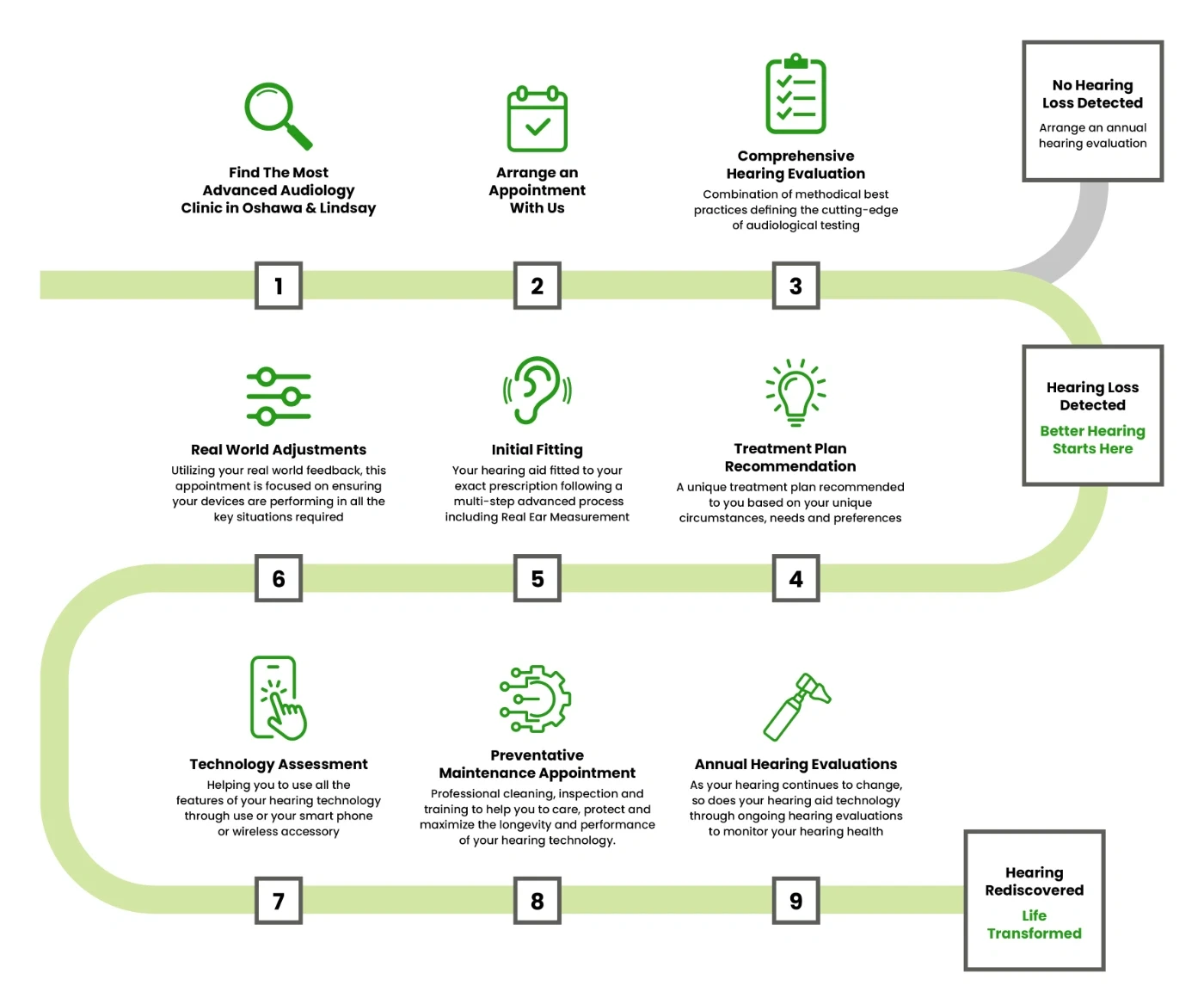
Ready, Set, Hear: Your Initial Hearing Assessment Process at Deegan Hearing Clinic
Take the first step toward clearer hearing with our comprehensive assessment process. From your initial visit to ongoing support, we’re here to guide you every step of the way.
Step 1: Book Your Assessment ($85)
Schedule a hearing assessment with our team by phone, via our website, or through email.
Step 2: Meet Your Clinician
You’ll have the chance to review your hearing health, concerns, and goals with our clinician in person at your chosen clinic. Together, you and your clinician will review your case history and explore how we can help.
Step 3: Comprehensive Hearing Exam
Rest assured that your hearing assessment is entirely painless and provides the most detailed results of your current hearing health status, showing areas where professional care can benefit your ears.
Your hearing assessment will include:
Visual Otoscopy: Examine your ear canal with a magnified light to check for earwax blockages and assess your external ear health.
Tympanogram/Impedance Test: A gentle pressure test to assess your eardrum’s mobility.
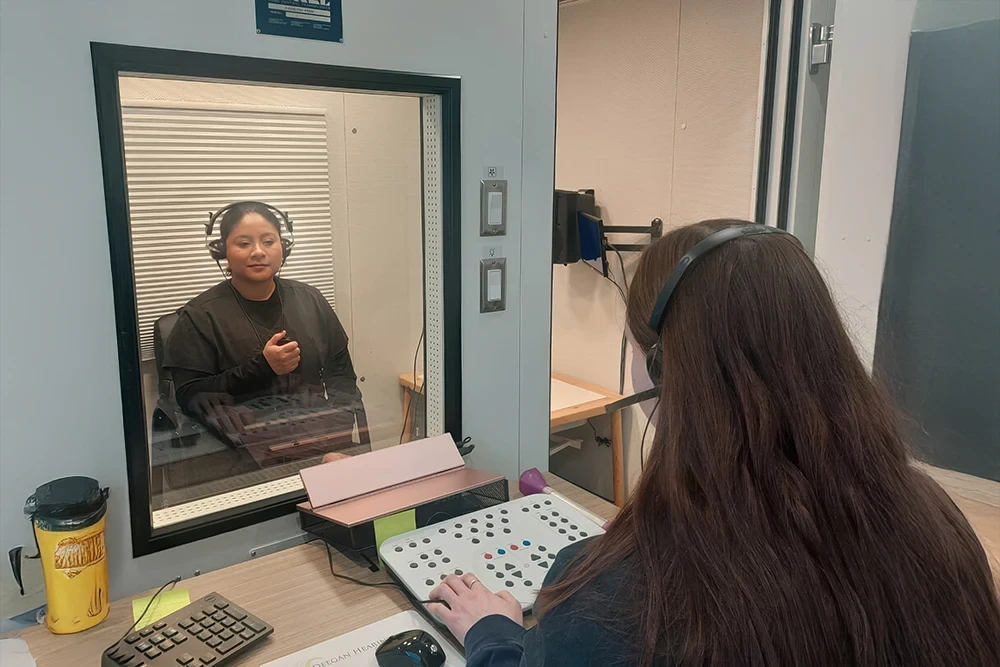
Hearing Tests in a Sound Booth: Includes air and bone conduction tests, speech tests, and background noise assessments as needed. These evaluations identify which frequencies and speech sounds are affected, helping to fully understand the specific frequencies of your hearing loss, like why you can hear some sounds but not others.
This is the turning point: If your clinician decides you’re a candidate for hearing aids, you will be ushered through our next steps. For those where no hearing loss is detected, you’ll be booked in for your annual hearing assessment with the same clinician in a year’s time.
Step 4: Review Results & Next Steps
Your clinician will explain your audiogram and answer your questions. If hearing aids are recommended, you can discuss options immediately or at a later appointment. In some cases, you may want to try programmed hearing aids in-office to experience the difference.
This initial appointment is for information gathering so you have the knowledge to make the best decision for yourself. You deserve to feel informed and comfortable before making decisions at every step of your hearing health journey.
Real Ear Measurements: Precise, Personalized Hearing Aid Fittings
If you move forward with hearing aids, proper fitting is just as important as choosing the right technology. At Deegan Hearing Clinic, we use Real Ear Measurements (REM) as a standard part of our hearing aid fitting process.
During this quick and comfortable procedure, a slim probe microphone is placed in your ear canal alongside your hearing aid. It measures the sound your hearing aid delivers inside your ear, where it matters most. Because every ear canal has a different shape and size, the same hearing aid settings can perform differently from one person to another.
Real Ear Measurement is widely regarded as the gold standard for verifying hearing aid fittings. By including REM in our fitting process, we can move beyond manufacturer settings and ensure your hearing aids are programmed for your unique hearing and ears, helping you enjoy greater clarity, comfort and confidence in everyday conversations.
Step 5: Ongoing Hearing Care
Ongoing support is key to successful hearing aid use. To ensure that you’re adjusting comfortably to your devices, a series of follow-up appointments are scheduled, plus routine six-month and annual check-ins.
At Deegan Hearing Clinic, we believe follow-up care is one of the most important parts of long-term success. Regular care lets us make adjustments, address concerns, and help you get the most from your hearing aids, supporting you every step of the way.
FAQ's
Frequently Asked Questions
If you have any other questions, please email us.